
The difference between a control feed action and a push feed action comes up often when hunters are speccing out a new rifle. Both designs are well-proven — but they're optimized for different conditions, and understanding those differences makes it easier to choose the right action for the job.
The BasicsWhat Is a Control Feed Action?
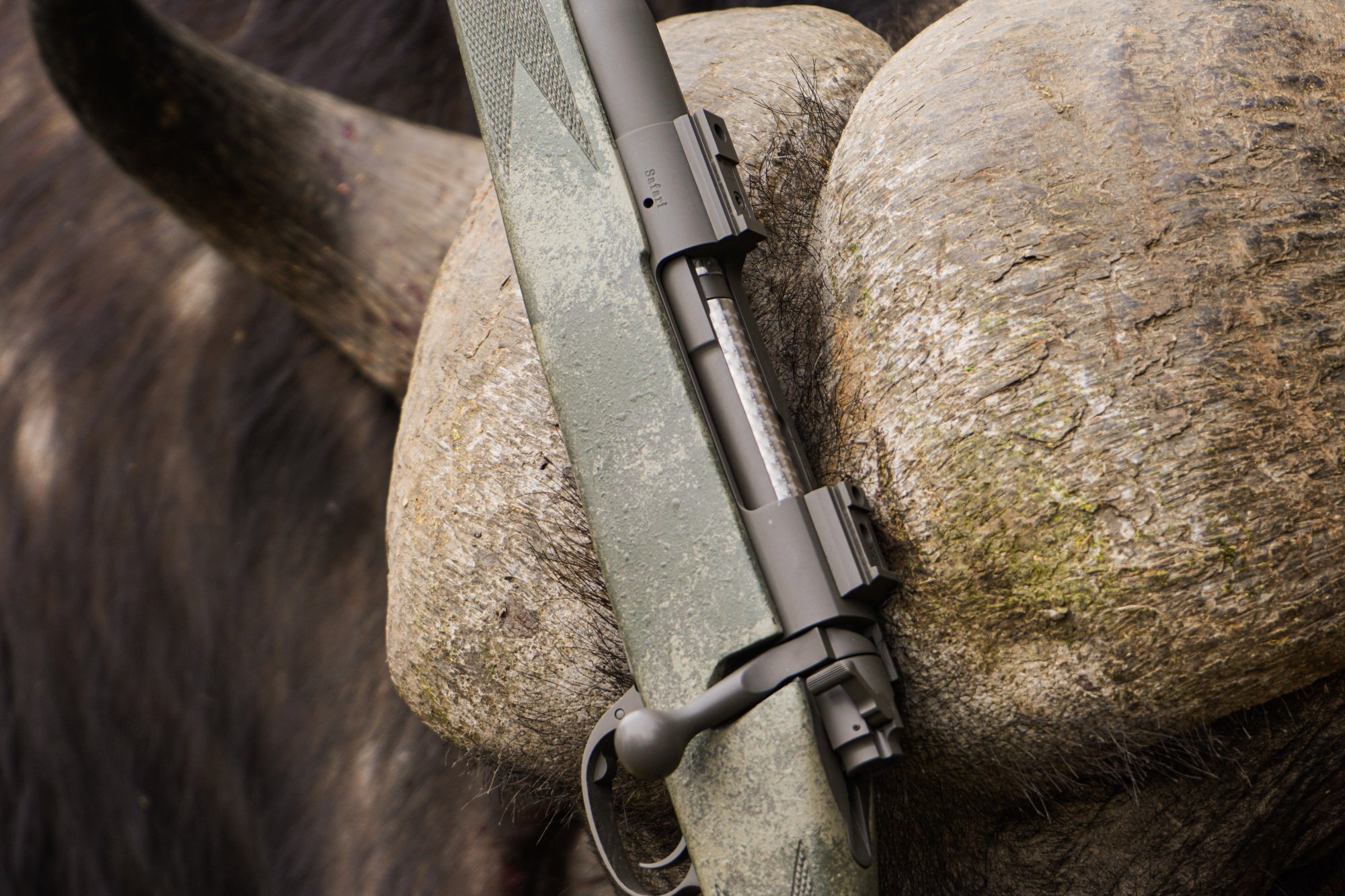
A control feed action is a bolt-action rifle design in which the cartridge is gripped and controlled by the extractor from the moment it leaves the magazine box until it is ejected from the chamber. (Fig.1) The case rim is captured and held throughout the entire feeding cycle — not just at the point of chambering.
The BasicsWhat Is a Push Feed Action?
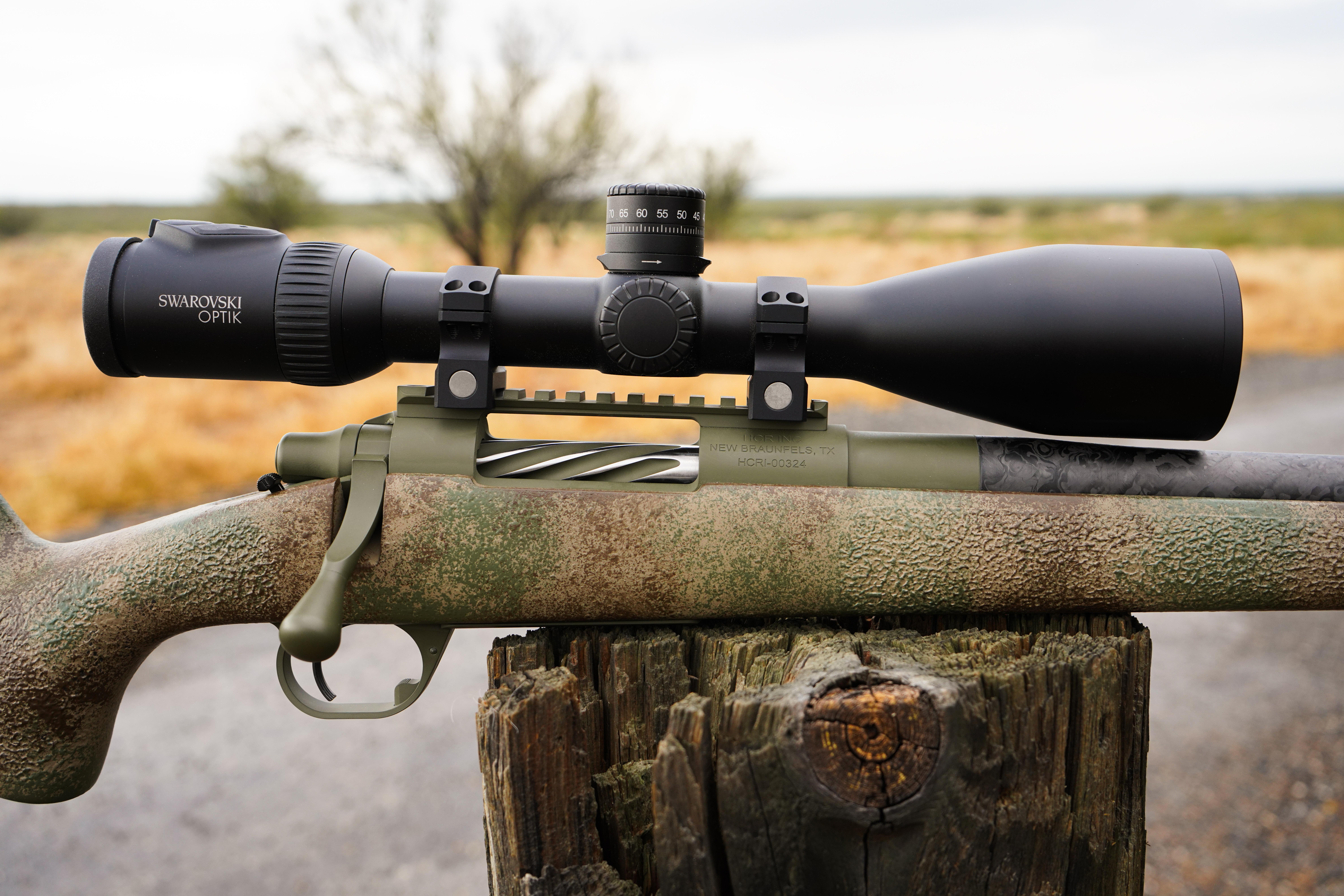
A push feed action is a bolt-action design where the bolt simply pushes the cartridge forward into the chamber (Fig. 2). The extractor snaps over the case rim only after the round is fully chambered. This design is extremely common in modern bolt-action sporting rifles due to its smoothness, lighter weight, and wider availability.
Why It Matters3 Features of a Truly Reliable Control Feed Action
Our Safari rifle is built on a control feed action for three specific, mission-critical reasons. Each addresses a real failure mode that can create a very dangerous situation.
A Large Steel Extractor with Maximum Case Rim Purchase
Control Feed
The large steel extractor on a control feed rifle provides a substantial grip on the cartridge case rim. This means the round will extract reliably even when the chamber is dirty, the cartridge is running hot, or the bolt is caked with mud or ice.
Push Feed
Push feed actions use a much smaller "mini-claw" extractor. It performs well under normal conditions but offers significantly less mechanical grip on the case rim.
Complete Cartridge Control at All Times
Control Feed
The extractor grabs the case rim the moment the cartridge exits the magazine box. This means a hunter can feed ammunition at virtually any angle — even upside down — and the round will still chamber correctly.
It also helps prevent the short-stroke malfunction. Under pressure, a shooter may fail to pull the bolt back fully, leaving the spent case only partially extracted. A control feed action holds onto that case, giving the shooter another chance to eject it cleanly. A push feed action will leave the fired case in the loading port and attempt to pick up a fresh cartridge, resulting in a double-feed and a locked-up rifle.
Push Feed
Without continuous case control, a short-stroke results in a double-feed. This is a frustrating malfunction that requires clearing before the rifle can fire again.
A Strong, Mechanical Steel Ejector
Control Feed
Our Safari rifle uses a heavy steel blade ejector that passes through a large slot in the bolt face. As the bolt is pulled back, the ejector strikes the case rim with mechanical force. The faster and harder you run the bolt, the more forceful the ejection — well-suited for the quick follow-up shots that dangerous game hunting can require.
Push Feed
Push feed actions typically use a small spring-loaded plunger ejector recessed in the bolt face. This design works reliably under normal conditions, but ice or debris can wedge between the plunger and its housing, causing ejection failure. A very rapid bolt cycle can also cause an issue — the fired case may begin entering the rear bridge of the action before the empty has fully cleared the ejection port, causing the case to fall back into the breech.
These aren't hypothetical concerns — they're the kinds of real-world conditions that inform how dangerous game rifles are designed and why experienced PH's (professional hunters) specify control feed actions for themselves and their clients.
Side by SideControl Feed vs. Push Feed: A Complete Comparison
Both actions have genuine strengths. Here is how they stack up across the scenarios where each one matters most.
| Factor | Control Feed | Push Feed |
|---|---|---|
| Extractor Size | Large steel extractor, maximum case rim purchase | Small mini-claw extractor; effective in normal conditions |
| Short-Stroke Resistance | Holds case — gives shooter a second chance to eject | Double-feed malfunction; rifle locked up |
| Ejector Type | Mechanical steel blade; force scales with bolt speed | Spring-loaded plunger; can fail in cold/dirty conditions |
| Rapid Bolt Cycling | Designed for fast, hard cycling | Can cause ejection failure at extreme speed |
| Weight | Noticeably heavier | Lighter — better for weight-sensitive hunts (e.g., sheep) |
| Bolt Feel & Feeding | Slightly more mechanical feel | Slicker, smoother feeding stroke |
| Stock & Trigger Options | Fewer aftermarket options and less adjustability | Wide variety of stock designs and trigger options |
| Best Application | Dangerous game hunting: Africa, Alaska, and similar applications | Most other hunts — especially precision and long-range setups |
Honest Trade-offsWhen the Push Feed Action Is the Right Choice
Control feed actions are not the right choice for every rifle or every hunter. Here is when push feed wins:
Weight-Critical Hunts
Control feed actions are noticeably heavier than most push feed designs. On a high-country sheep hunt — where every ounce in your pack matters over miles of vertical gain — that extra weight is a real cost.
Smooth Action & Bolt Feel
The push feed bolt has a slightly slicker feel because it simply slides the cartridge along to the chamber, rather than grabbing it from the magazine box. Many shooters prefer this for target shooting or precision shots at longer ranges.
Slow-Speed Ejection
A push feed bolt will reliably eject a casing even with a slow, deliberate bolt pull. The control feed mechanical ejector is optimized for faster cycling — a genuine advantage in a dangerous game scenario, but a minor consideration for other use. A control feed action can fail to eject the case with a very soft bolt cycle because the case does not hit the ejector with enough force.
Aftermarket Options & Precision Builds
Push feed actions — particularly quality options like the Defiance actions we proudly use — offer a far wider selection of stock configurations and trigger options. This makes them ideal for custom precision rifles built for long-distance shooting in varied positions.
Our PositionThe Bottom Line
For dangerous game hunting — Africa, Alaska, or anywhere else you're pursuing animals that may charge — we build on a control feed action. The reliability advantages under field conditions, combined with short-stroke resistance and mechanical ejection, make it the superior choice for hunting dangerous game.
For everything else, a quality push feed action is often the better fit. The Defiance actions we use in our non-dangerous game rifles are our personal favorite.
It really does come down to matching the right tool for the job.
For more information about the Safari Rifle and Control Round Feed:
More DetailsCommon QuestionsFrequently Asked Questions
What is the main difference between a control feed and push feed rifle action?
A control feed action grips the cartridge case rim as soon as it exits the magazine box, maintaining control through the entire feeding cycle. A push feed action simply pushes the round forward, with the extractor snapping over the case rim only after the cartridge is fully chambered.
Why is a control feed action preferred for dangerous game hunting?
Control feed actions resist short-stroke malfunctions, provide stronger mechanical ejection at high bolt speeds, and use a larger extractor that functions reliably in cold, dirty, and wet conditions — all practical considerations for dangerous game hunting in the field.
Is a push feed action reliable for hunting?
Yes. Push feed actions are highly reliable under normal hunting conditions and are the better choice for most hunts — especially when weight, smooth bolt feel, and aftermarket customization are priorities. They are not recommended for dangerous game hunts where extreme conditions and rapid follow-up shots are required.
What is a "short-stroke" malfunction?
A short-stroke occurs when the bolt isn't pulled fully rearward, leaving the spent case only partially extracted. In a push feed action, this typically causes a double-feed — the rifle tries to chamber a fresh round on top of the empty case, locking the action. A control feed action holds onto the empty case, giving the shooter another opportunity to clear it before chambering a new round.